

By Isooda Niroomand and Laura Lebel-Pantazopoulos, 2025 CIP Emerging Leaders Program Participants
It’s not often that mid-career professionals get the opportunity to pause, reflect, and intentionally focus on their growth as leaders, but the Canadian Institute of Planners’ Emerging Leaders Program gave us exactly that. As two participants in the 2025 cohort, we were eager to deepen our leadership skills and connect with peers from across the country. What we found was a transformative experience rooted in shared learning, mentorship, and the power of community within the planning profession.
We are two mid-career planning professionals: Isooda works in public-sector transportation planning, and Laura is in the private sector as a land-use planning consultant. Though we come from different corners of the profession, we both came to this program with a common goal: to develop our leadership skills and strengthen our connection with other planners and the profession. We believe our different backgrounds will bring unique perspectives and takeaways as we reflect on our experience participating in the program.
The Emerging Leaders Program kicked off with three virtual modules focused on effective leadership, emotional intelligence, and building meaningful relationships. Each session featured insights from inspiring leaders in the planning field, including Natalie Persaud RPP, MCIP, Eleanor Mohammed RPP, FCIP, and Kristy Kilbourne RPP, MCIP. These modules gave us the chance to connect with our peers from across Canada through breakout discussions, where we exchanged our perspectives on what defines strong leadership, reflected on our experiences in the profession, and shared our career aspirations.
A highlight of the program was the opportunity to take CIP’s online course The Path: Your Journey Through Indigenous Canada, which offered meaningful teachings on Indigenous history, cultures, and contemporary realities. We’ve both completed Indigenous cultural awareness training programs before, but this one felt different. It was thoughtfully designed for planners and clearly connects to the profession. The course guided us through topics such as treaties, evolving terminology, and Truth and Reconciliation, while encouraging us to pause, reflect, and consider how our work as planners can actively support reconciliation in practice.
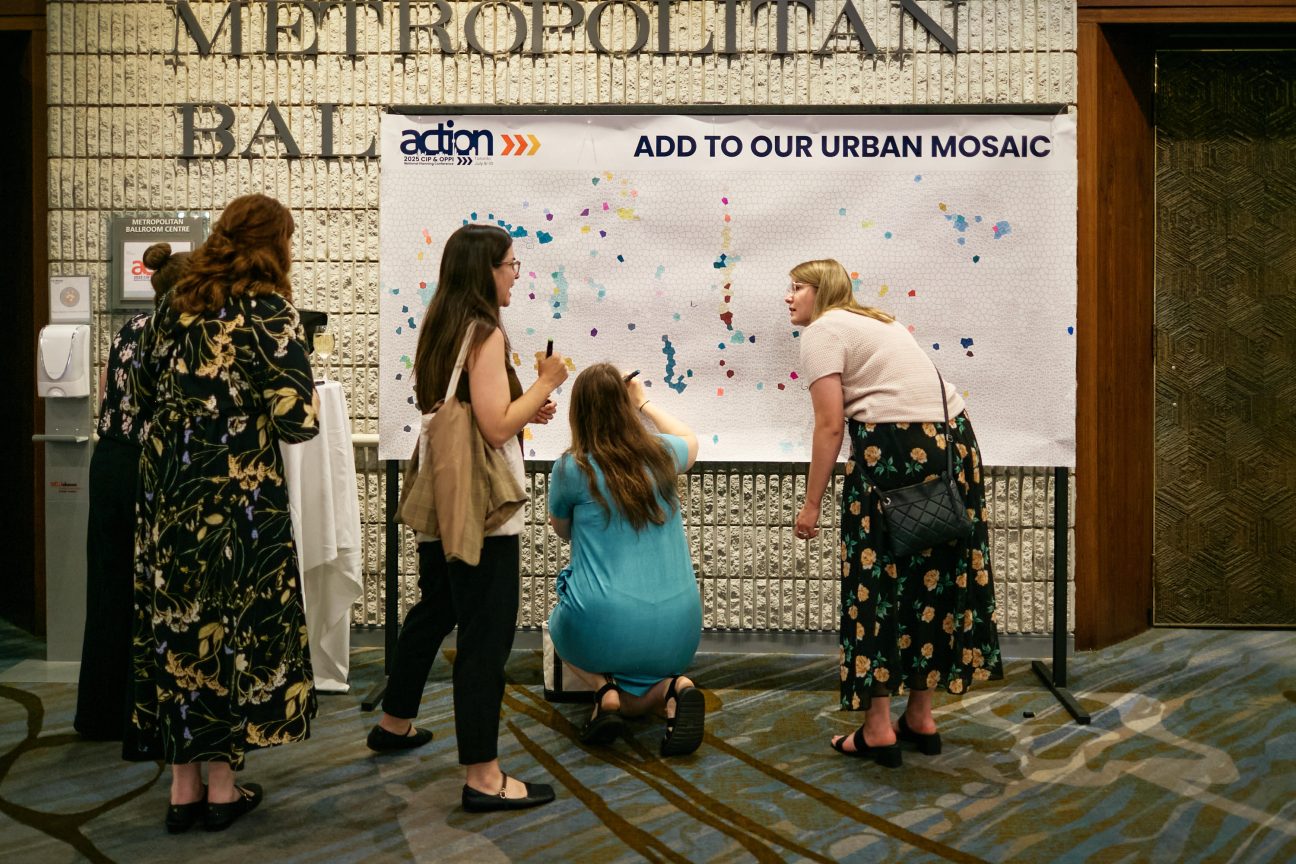
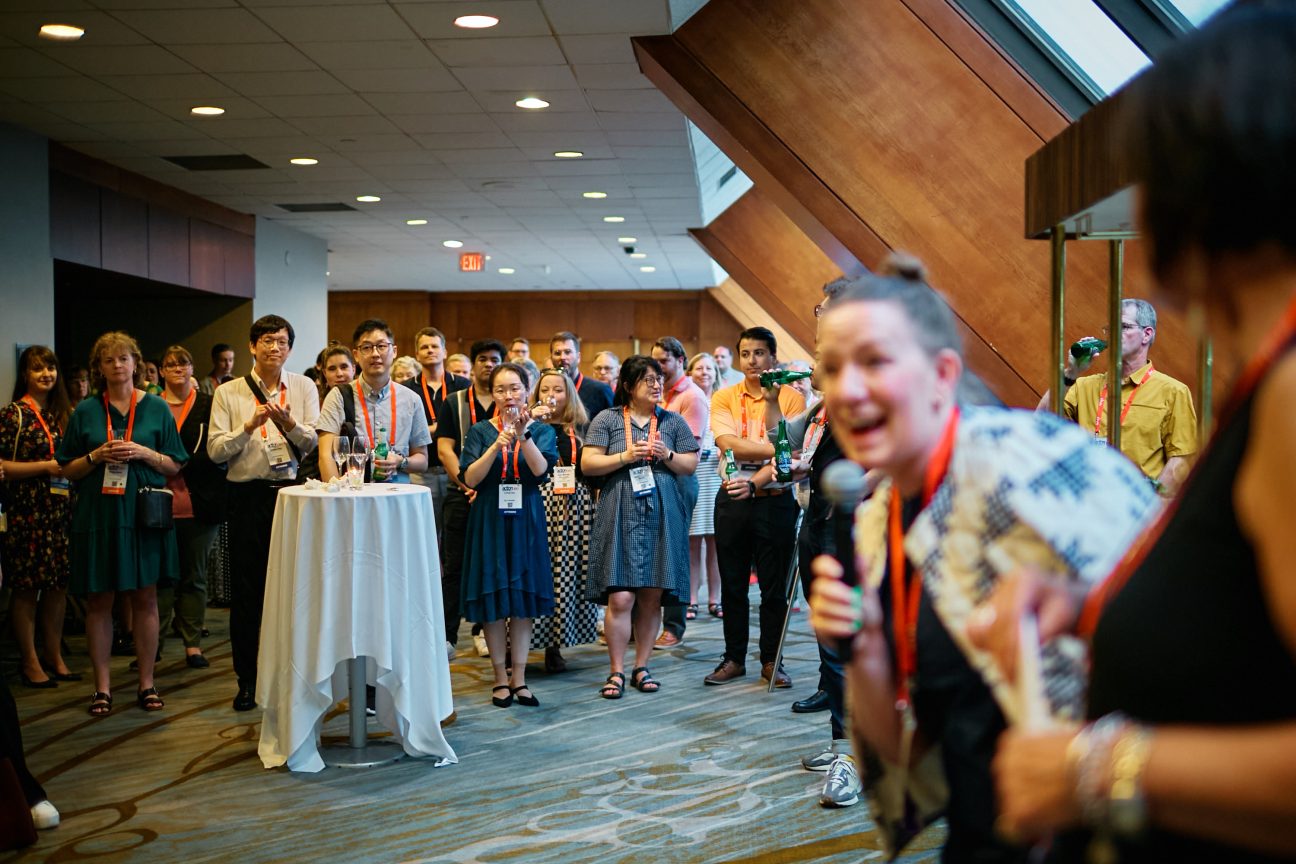
The Emerging Leaders Program culminated in us all meeting in person for the first time at ACTION 2025, CIP/OPPI’s National Conference in Toronto from July 8-10, 2025. The conference was the largest planning conference in Canadian history, with over 1,400 in-person attendees and 500 online participants, making it the perfect setting for our cohort to finally come together after months of virtual connection. We were excited to meet face-to-face and share in the energy and inspiration of the conference experience.
We started the conference with exclusive Emerging Leader Program sessions and networking events designed to help us connect not only within our cohort but also with leaders across the profession. Highlights included a workshop on public engagement, a walking tour of Toronto’s waterfront led by City of Toronto staff, a lunch with the CIP Board and OPPI Council, and an evening of networking before the official start of the conference. These sessions set us up to navigate the busy conference with more confidence, and it was great to have familiar faces around throughout the week.
During the conference, we shared meals, debriefed after sessions, and exchanged stories from our professional journeys. These moments of connection were more than just social; they created space for honest reflection and peer learning. Having friends to navigate the conference with made the experience richer and more meaningful. It reminded us that leadership growth often happens through shared insights, collaboration, and the diverse perspectives of those around us.
After the conference, we were required to write final reflections on our experience participating in the program. We were asked to reflect on our thinking prior to joining the program, on how our views on leadership have changed, and to think about this in the context of the challenges the government is facing with both local and global issue
The Emerging Leaders Program concluded a few weeks after the conference with a final group debriefing session, an opportunity to reflect on how the experience shaped our professional and aspiring-leader growth. Across the group, several key themes emerged. Many of us found that the program gave us space to pause and think more intentionally about our leadership approach, how we communicate, make decisions, and support those around us. Others shared how they were already putting lessons into practice, from applying strategies learned in the conflict management workshop to leading conversations about collaboration and leadership within their organizations.
There was also a shared sense of how the program strengthened our confidence and perspectives. Many of us felt better equipped to navigate challenges, more aware of our leadership styles, and more connected to a supportive network of peers who understand the realities of the profession.
As we wrapped up, we agreed that the most meaningful takeaway was a renewed sense of purpose, a commitment to lead with openness, empathy, and collaboration, and to stay involved in the planning community through mentorship, volunteering, and ongoing learning.
Isooda: Openness in Leadership
What stood out most for me about the Emerging Leaders Program was realizing that good leadership isn’t about having all the answers; it’s about being open, listening, and creating space for honest conversations. Hearing how my peers tackled similar challenges gave me new perspectives, especially learning from those in the private sector whose experiences differed from my municipal role but reflected many of the same realities we all face as planners and leaders.
Laura: Leadership through Relationships
For me, the Emerging Leaders Program reinforced that building strong relationships with co-workers, interest-holders, and other planners with different knowledge bases is a key component of good leadership. With good relationships, you broaden your perspective on planning issues, build empathy, and share resources. It was interesting to attend sessions and debrief with our public-sector peers, who often had very different takeaways and contextual information.
We would like to thank the CIP team, especially Laurie Langlois, CIP’s Member Engagement Manager, and Natalie Persaud RPP, MCIP, the program’s facilitator, for making this program available. If you are a planner looking for inspiration and next steps for your career development, we highly recommend applying to CIP’s Emerging Leaders Program!
About the Author
Authored by Laura Lebel-Pantazopoulos, RPP, MCIP, Senior Planner at The Biglieri Group Ltd., and Isooda Niroomand, Project Manager at City of Toronto, Transportation Unit.
Applications for the 2026 Edition of CIP’s Emerging Leaders Program Are Now Open!
The CIP Emerging Leaders Program is an interactive program designed to bring together early-career planners from across the country to connect, learn, and grow as leaders in the profession.
What You Need to Apply:
- CIP membership in good standing (don’t forget to renew your membership!)
- A brief summary of what you hope to gain from the program
- Your personal and/or professional goals for the next five years
CIP is pleased to welcome Urban Systems and the Professional Standards Board for the Planning Profession in Canada as partners for this initiative. We are grateful for their commitment to developing planning’s future leaders and investing in our profession.
Deadline: January 23, 2026, 11:59 p.m. PT