
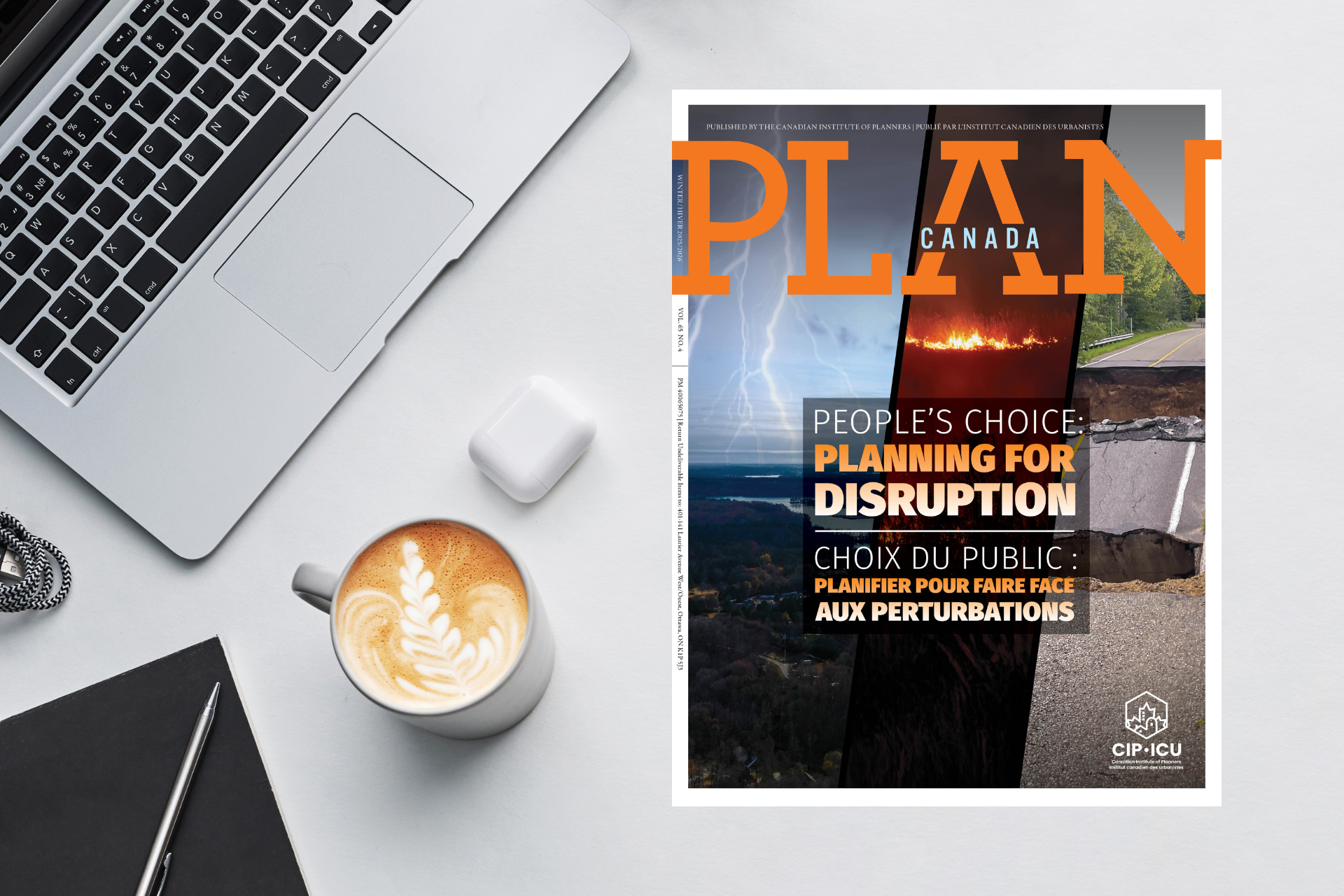
Editors’ Note by Harrison Ellis RPP, MCIP and Ezra Wasser RPP, MCIP
The Only Constant is Change
So, how do we respond to change? The theme of this issue of Plan Canada is ‘Planning for Disruption.’ When contemplating disruption, it’s helpful to think about it in contrast to the opposite – stability. When discussing growth, planners don’t tend to use the term ‘stability,’ however, we tend to imply a future state of stability by means of sustainability. The three pillars of sustainability (economic, environmental and social sustainability), can provide a framework for categorizing disruptive events. This edition of Plan Canada contemplates what happens when the pillars of sustainability are shaken, resulting in economic, environmental, and social disruptions.
Disruptions are rarely unforeseen; at our fingertips is a wealth of data, historical and contemporary patterns, and peer expertise that we can use to integrate resilience into everyday decision-making. This edition of Plan Canada intends to help compile this accumulated knowledge to continue our professional conversation about resilience.
We start our discussion of disruption by shifting our mindset from reactive to proactive. Jack Lindsay leads by echoing a decades-old call to action to planners for integrating hazard risk reduction and adaptation into community planning.
Kevin Hanna, Troy McMillan, Mark Seasons and Kayleigh Swanson examine the capacities needed for comprehensive urban disaster resilience and provide an integrated six-part framework for risk planning, emphasizing inevitability, resilience, and collaboration.
Glenn Miller demonstrates how past success with environmental resilience related initiatives in Canada can provide lessons for how we can make a positive impact in the future. Chris Jones provides further context with a political history of the intertwined roots of planning and environmental conservation in Ontario.
Picking up on the theme of conservation in Ontario, Victoria Kramkowski, John MacKenzie and David Kellershohn from the Toronto & Region Conservation Authority discuss how conservation authorities in Ontario prepare for and respond to severe storms and their aftermath. Kyra Howes and Dalia Al-Ali from the Nottawasaga Valley Conservation Authority add highlights of green infrastructure that are contributing to effective watershed management that safeguard communities while fostering sustainable growth and environmental stewardship.
Kyle Schole reflects on experiences during the 2025 wildfire season and shares lessons learned and insights from direct experience about the connections between long-range planning and how institutions coordinate responses and support the public during emergencies.
Emergency situations can result in reconsideration of our landscape. Mark Barsevskis and Magi Scallion discuss how the design and construction of trail systems can play a vital role in emergency planning and grow resilience in our transportation networks across the country.
Meanwhile, Sawyer Jonker and Jennifer Dean explore what happens when transportation systems are disrupted by the gig economy, as they study the influx of bicycle couriers using regional rail for commuting in the Greater Toronto and Hamilton Area and the challenges that both riders and operators face.
Sara Epp, Christopher Fullerton, Natasha Gaudio Harrison and Ryan Gibson take a look at urban-to-rural migration patterns in the early 2020s during a period of crisis, the impacts on individuals and communities, and ongoing physical and social infrastructure challenges.
Sadia Afrin Lema and Robert Patrick discuss emergency plans and how they lack specific language, consideration and policy aimed at supporting First Nations women and girls during times of crisis, plus opportunities to shift towards Indigenous-led, gender-sensitive, and culturally responsive emergency frameworks.
With our ability to connect across disciplines, identify scenarios, we as planners are increasingly at the forefront of risk mitigation and disaster resiliency. We strive for sustainability and resilience for everyone in our communities, while recognizing the realities of an ever-changing and chaotic world. With every recommendation and decision, we are responsible for anticipating both individual potentially catastrophic events and successions of compounding disruptive events.
The Plan Canada editorial committee was thrilled by the response to our call for articles on ‘Planning for Disruption.’ We extend our gratitude to each author for their insights and solutions identified as we grapple with these interconnected and multidimensional problems. As we build together for the benefit of our generation and generations to come, please consider these lessons learned to help our communities prepare to weather storms together for both the near- and long-term future.
How to Read This Issue of Plan Canada
Are you a CIP member?
Not a CIP member?
About the Editors
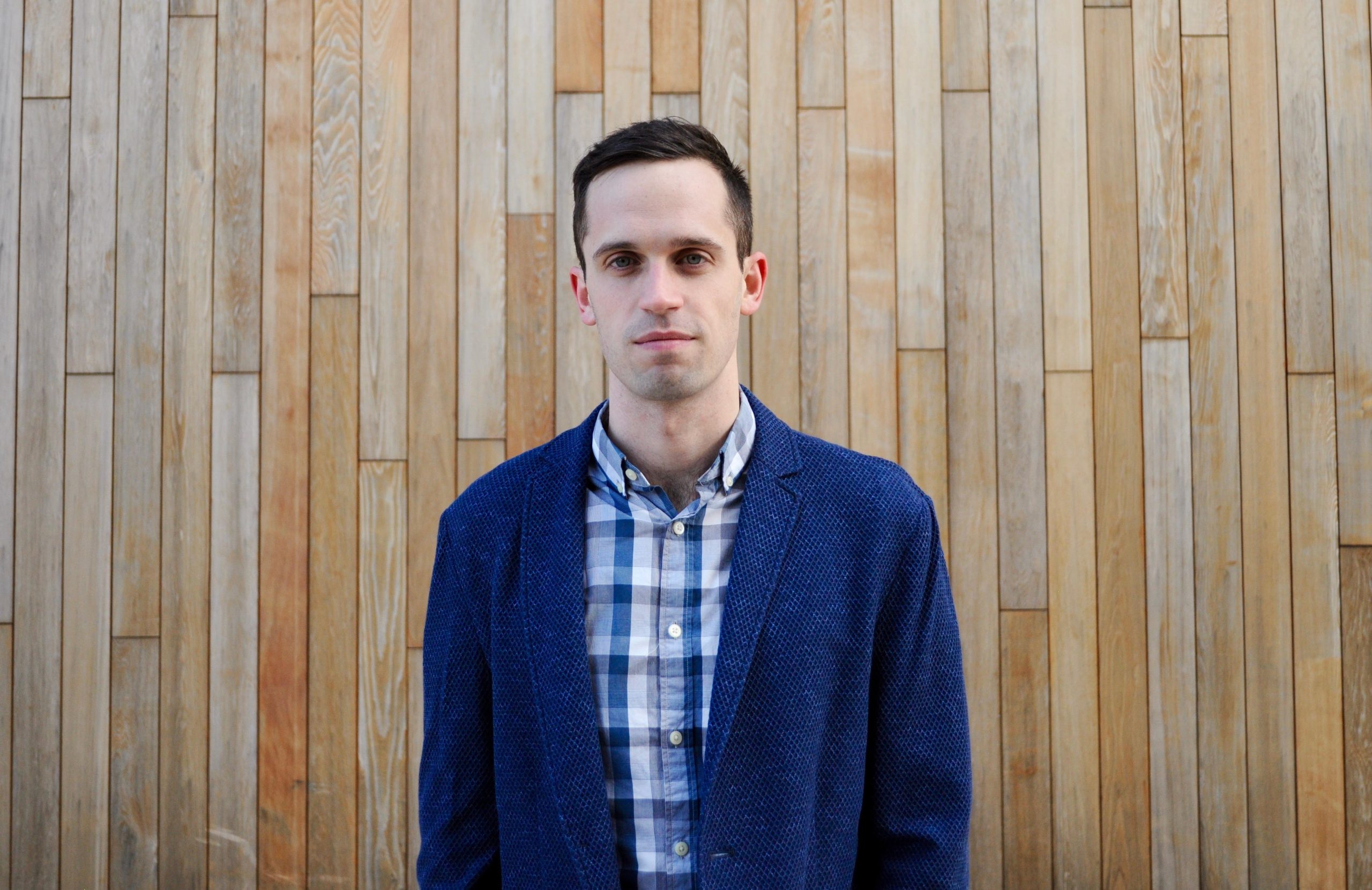
Harrison is a Registered Professional Planner focused on supporting Indigenous communities. His work with Dillon Consulting has focused on needs assessments for housing and facilities, land use plans, and strategic planning. He holds graduate degrees in Planning from Dalhousie University and International Public Policy from Wilfrid Laurier University.

Ezra is a registered professional planner and a project manager with the City of Toronto. Prior to joining the City of Toronto team, he worked as a planner with the City of Calgary. Ezra is a graduate of the University of Waterloo School of Planning, is currently pursuing a graduate diploma in public administration in the Local Government Program at Western University, and volunteers with the Toronto District of the Ontario Professional Planners Institute.