
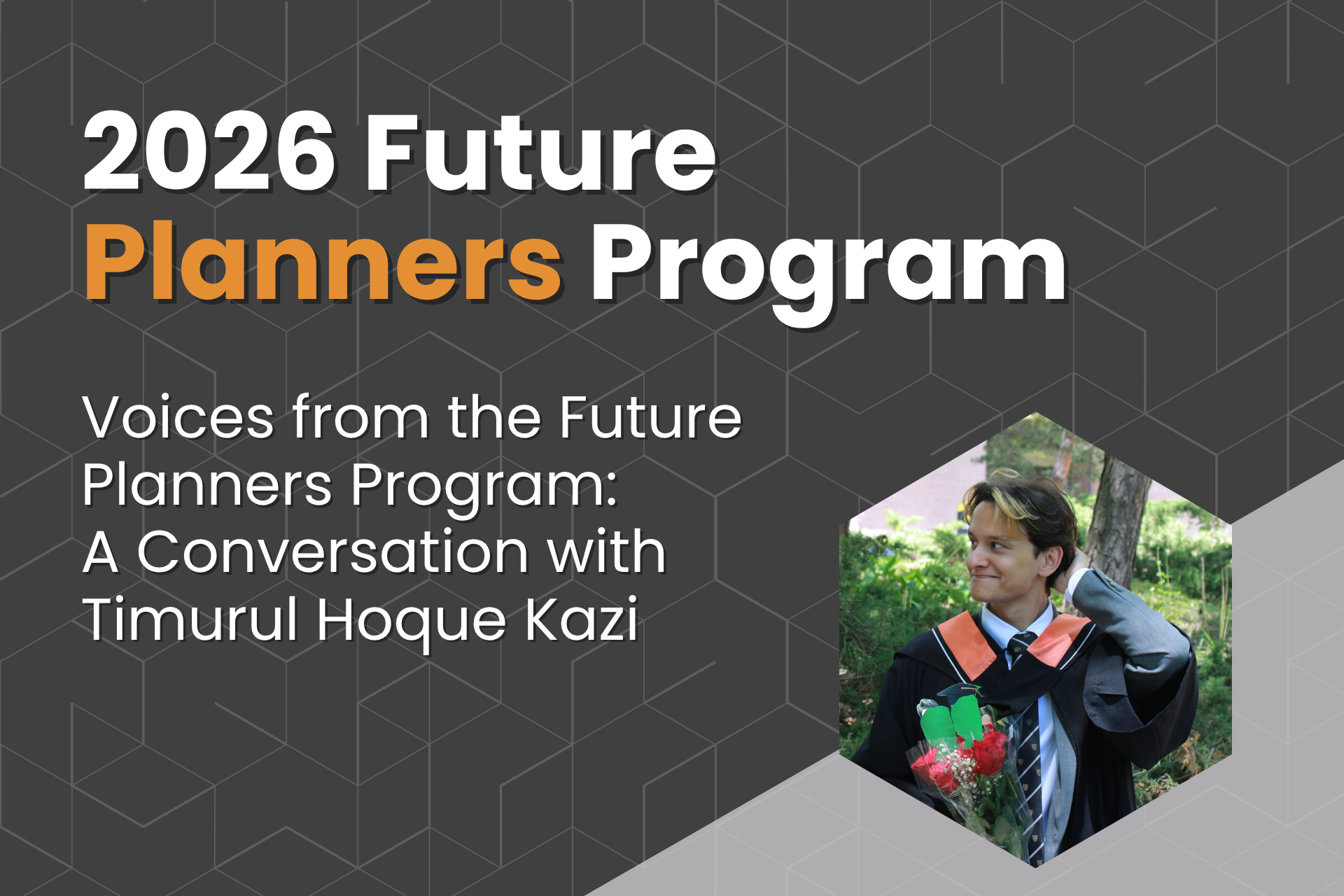
The Future Planners Program supports students and emerging planners as they prepare to transition from their studies into the planning profession. Through professional development, career resources, networking opportunities, and connections with participants, students build the skills and confidence needed to take the next step in their careers.
In this Q&A, we catch up with Timurul Hoque Kazi about his experience in the Future Planners Program, the lessons and connections he gained along the way, and how the program has helped shape his next steps as a future planner.
What inspired you to participate in the Future Planners Program?
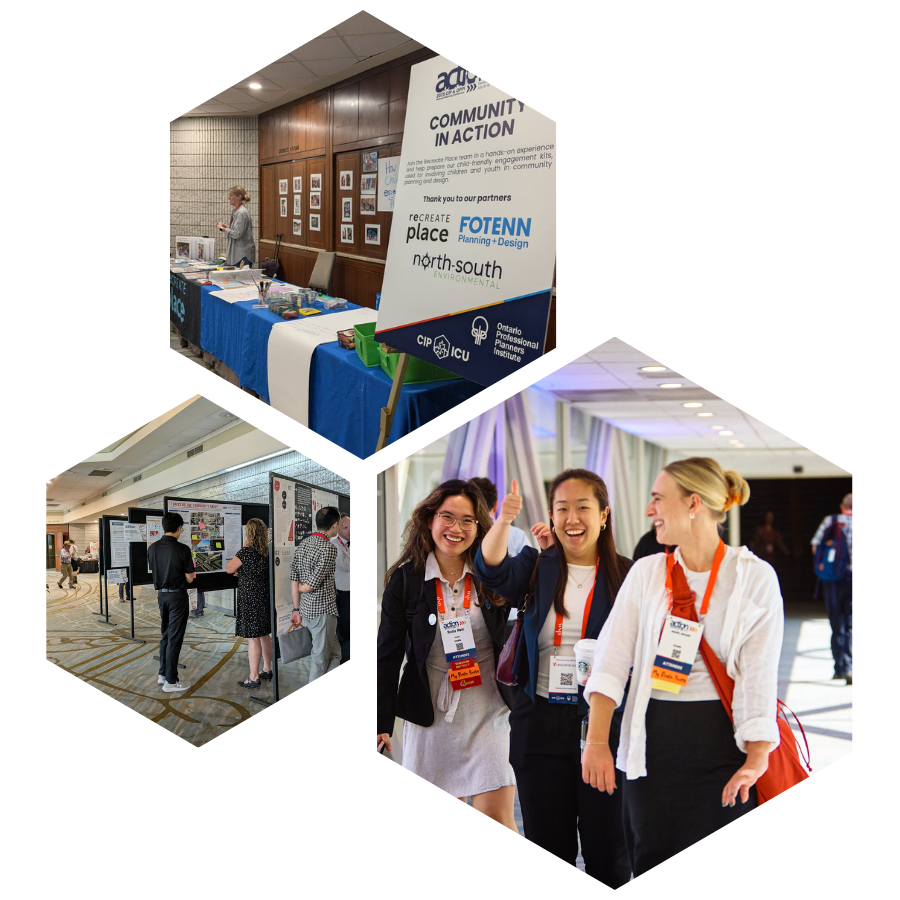
When my friend first told me about this program, the introductions to senior planners and opportunity to connect with more people in the same stage of their career immediately had me interested. With my job search well underway, I was excited to learn more about the state of planning, trade tips about job applications, and get some advice and perspective from planners who have been around the block a little longer than my peers and I. I was also thrilled by the idea of attending the CIP/OUQ conference and meeting planners from across (and beyond) the country, since I had only ever attended our Ontario planning conferences prior to that.
What was the most valuable part of your Future Planners Program experience?
Each part of the program had its own takeaways that stuck with me, but being confident enough and capable of asking the right questions was easily the most important. There were countless but short opportunities to pick the brains of world-class planners for their thoughts and advice; learning to push past my hesitation and come up with highly specific questions about their experiences produced some of the most remarkable insights and inspiring conversations that I have had. I have kept that up beyond this program, and my subsequent conversations have been infinitely more helpful in growing my knowledge of planning and guiding my career decisions.
How did the program help you build connections within the planning profession?
The first connections that this program created – and the ones that I look forward to seeing grow – were with my FPP cohort-mates. Being brought together with keen and passionate students from across the country was a great experience, and I loved our chats, debriefs, and debates at breakfast and between sessions. Being at the CIP conference was also a great opportunity to speak with panelists after their sessions; asking Brian Chow about the role of planners in flood resilience or seeking advice from Lauren Miller on finding community after relocating for work, was invaluable in giving me the perspective and confidence to step out of my comfort zone and pursue far-flung, fascinating work in planning. Being a new graduate, hearing about senior planners’ tumultuous graduations and winding paths within planning was also greatly encouraging.
What did you learn about yourself as an Emerging Planner through your participation in the Future Planners Program?
When I first decided to pursue planning, the mission I gave myself was to help create sustainable and vibrant communities – as programs like this one show, however, there are about a million different ways to do that. That said, some of the panels and conversations I had during this program helped me clarify the pathways that would be most fulfilling to me; I was inspired by the work of urban designers and environmental planners in tackling issues such as climate adaptation, weaving nature back into the city, and social connection, and I look forward to pursuing opportunities and further studies in that direction.
How has the Future Planners Program influenced your plans for the next stage of your career?
Prior to this program, I had a sense of direction for my career, but very little in terms of next steps. The most tangible advice I received was to prioritize getting broad exposure to planning work, whether that’s by going rural, going north, or going to adjacent fields. In short, I’m keeping an open mind to where this early stage of my career will take me. Following that, I plan on taking my early experience into further studies to sharpen my design skills and environmental knowledge, preparing me well to pursue the work I am most passionate about.
What advice would you give to students considering the Future Planners Program?
The first, easiest piece of advice is to apply! Whether you’re completely at a loss with where to take your career or have a strong direction and just need the support and connections to get there, the FPP program is a great opportunity to help you in your journey. To get the most out of this program, though, be prepared to push your comfort zone and ask lots of questions. Having an eagerness to learn and connect with people is an asset that will take you far and let you have the most brilliant conversations. If you have any questions, feel free to reach out, and I look forward to meeting you!
Is there anything you would like to share with CIP members?
Of course! I want to say that I’m super grateful that this program exists; to Hannah, Laurie, and Gillian for organizing it; and to all the professionals who were so keen to chat with young planners and help us grow in this amazing field. From Sylvain Ducas sharing his unbounded passion for Montreal urbanism to Paul Bell offering a lot of encouragement and insight into opportunities within environmental planning, it makes a world of difference having this kind of support as a fresh graduate. Finally, to my FPP cohort-mates, it was amazing getting to know you all and I look forward to seeing you in the field!
Want to get more involved in the planning community?
Be part of Canada’s planning community. As a CIP member, you’ll gain access to a national network, exclusive career resources, and events tailored to every stage of your career.
About the Author
Timurul Hoque Kazi is a 2026 graduate from the University of Waterloo’s School of Planning. His experiences have spanned from co-operative housing to municipal planning, including a placement doing urban climate adaptation research in Aachen, Germany. Currently on the job search, Timurul spends his time volunteering with Urban Minds, working on his portfolio, café-hopping in Toronto, and training in street-style dances and choreography.