
Plan Canada Spring 2027 Issue
Planning Complete Communities
Planning influences where we live, how we move, and our overall health and well-being. The relationship between how our communities are designed and the health of Canadians is increasingly important as social and environmental stressors contribute to rising rates of physical and mental health issues.
Professional planners are trained to create sustainable, complete, and healthy communities. While housing continues to be a critical priority, well-planned communities include parks, healthcare facilities, recreational amenities, and transportation and infrastructure systems to support economic growth, climate adaptation, and overall well-being.
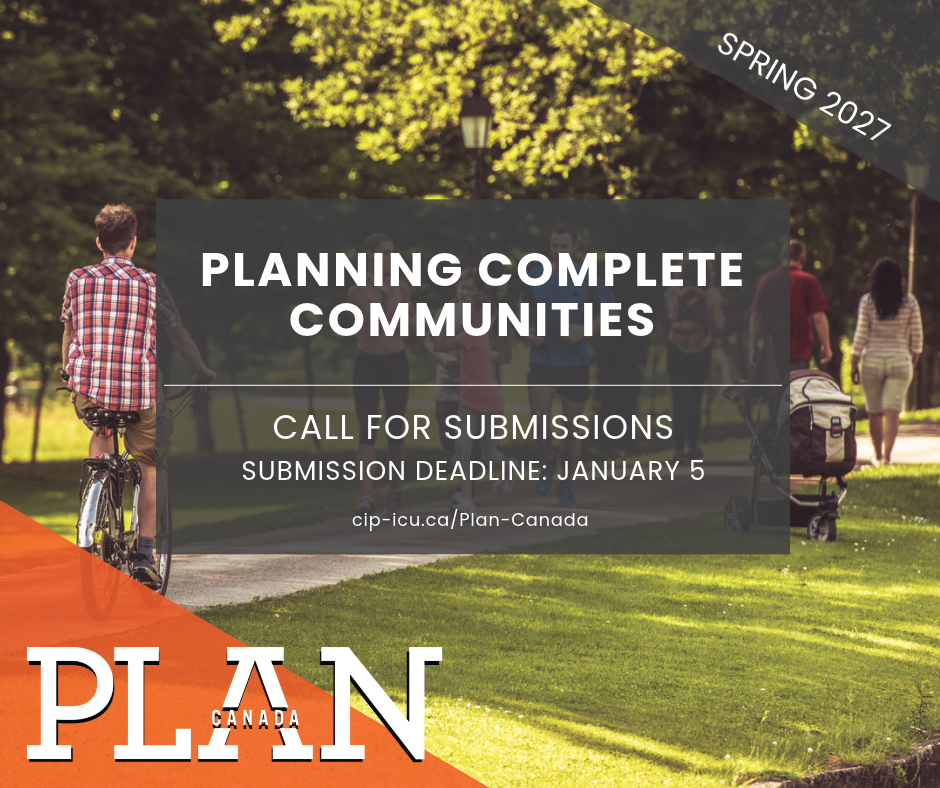
What do Canadian communities need to thrive in the present? Are there essential aspects of complete communities that have been overlooked or forgotten? Are there unique challenges to creating complete communities across Canada’s diverse urban, suburban, rural and remote landscapes? How can complete communities be designed with diverse backgrounds in mind?
Potential topics include:
- Sustainable and accessible transportation systems;
- Equitable, resilient, and healthy communities;
- Combatting loneliness and fostering a sense of togetherness;
- Protection of cultural and natural heritage;
- Demands for social infrastructure and human-centered design;
- Climate adaptation and disaster risk reduction;
- Access to public and green/blue spaces;
- Increasing human and animal interaction in communities; and
- Domestic or global examples of complete communities
The leads for this issue are Jennifer Dean, PhD, RPP, MCIP and Emma Borho, MA, Candidate RPP, MCIP. We welcome early conversations about article ideas and would be happy to discuss potential submissions.
Submission Deadline: January 5, 2027, 11:59 p.m. PT