
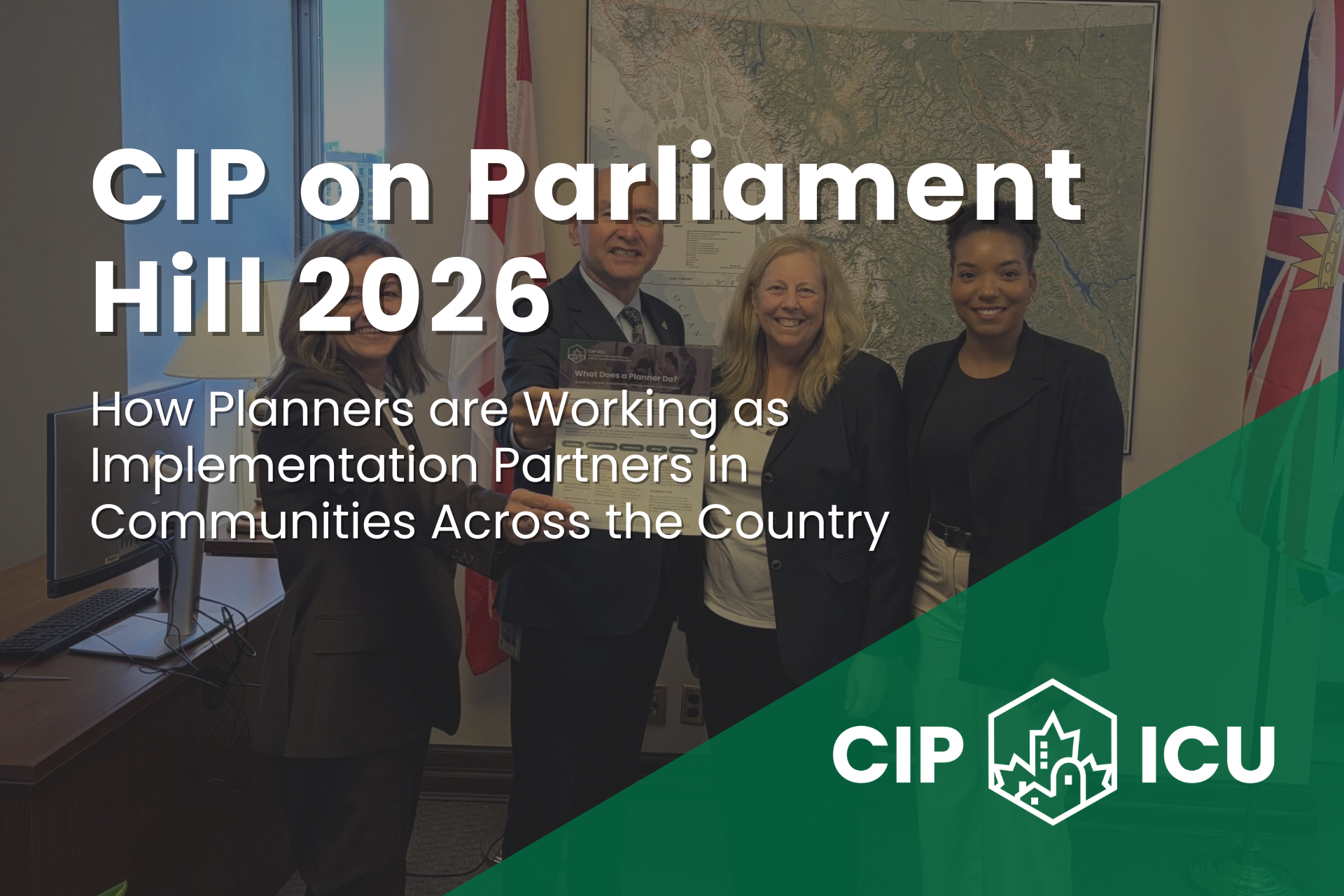
Parliament is back in session, and for the second year in a row, CIP hosted its Hill Day to advocate for strong planning capacity across Canada. Members of the CIP Board and staff team divided into three groups and, over the course of the day, attended 11 meetings with elected representatives from both sides of the political aisle, as well as senior officials from key departments.
“I was proud of our Board Members for representing professional planners from coast-to-coast-to-coast highlighting how we can help make our communities resilient, complete and strong,” said CIP President, Lesley Cabott RPP, FCIP, ICD D.
The primary goal of the meetings was to grow awareness and understanding of the important role that planners play as implementation partners in communities across the country, and how developing planning capacity supports federal priorities and major projects. Building on priorities advanced through CIP’s existing federal advocacy, this included promoting our proposals for PlanInsight Canada, a national planning-intelligence platform, and an invitation-based National Community Planning Advisory Service to support rural, northern, and Indigenous communities in managing major investment and growth.
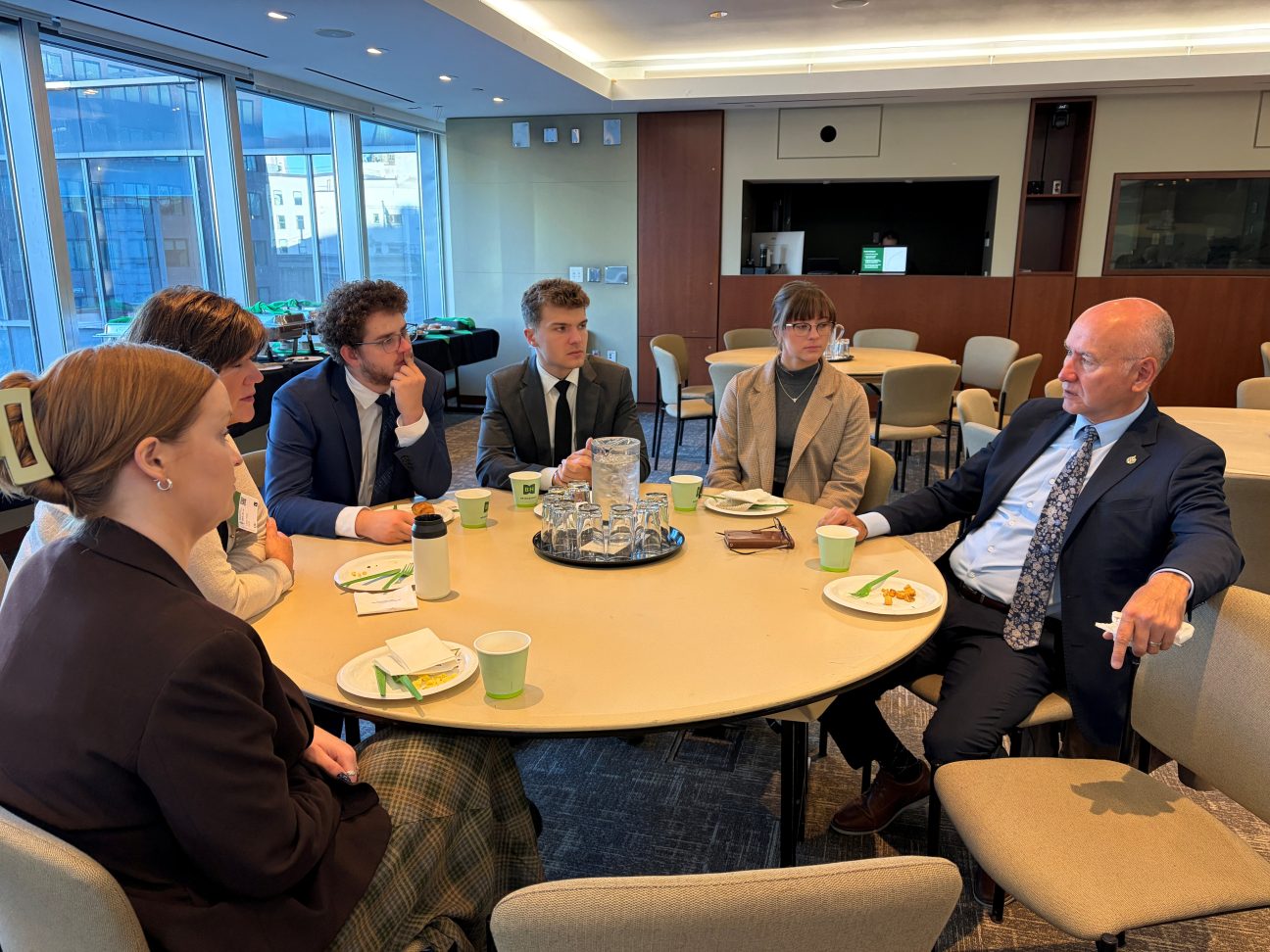
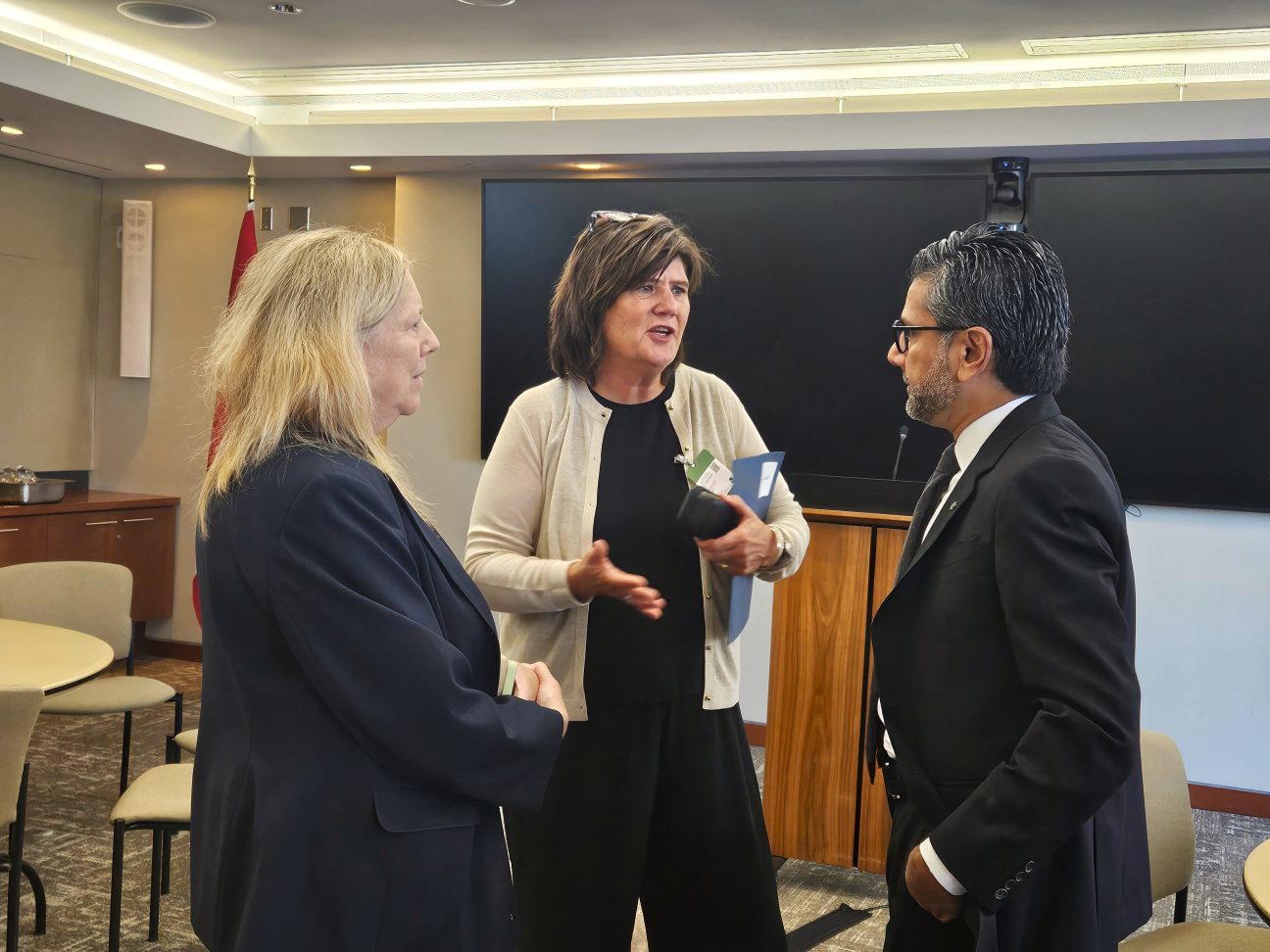
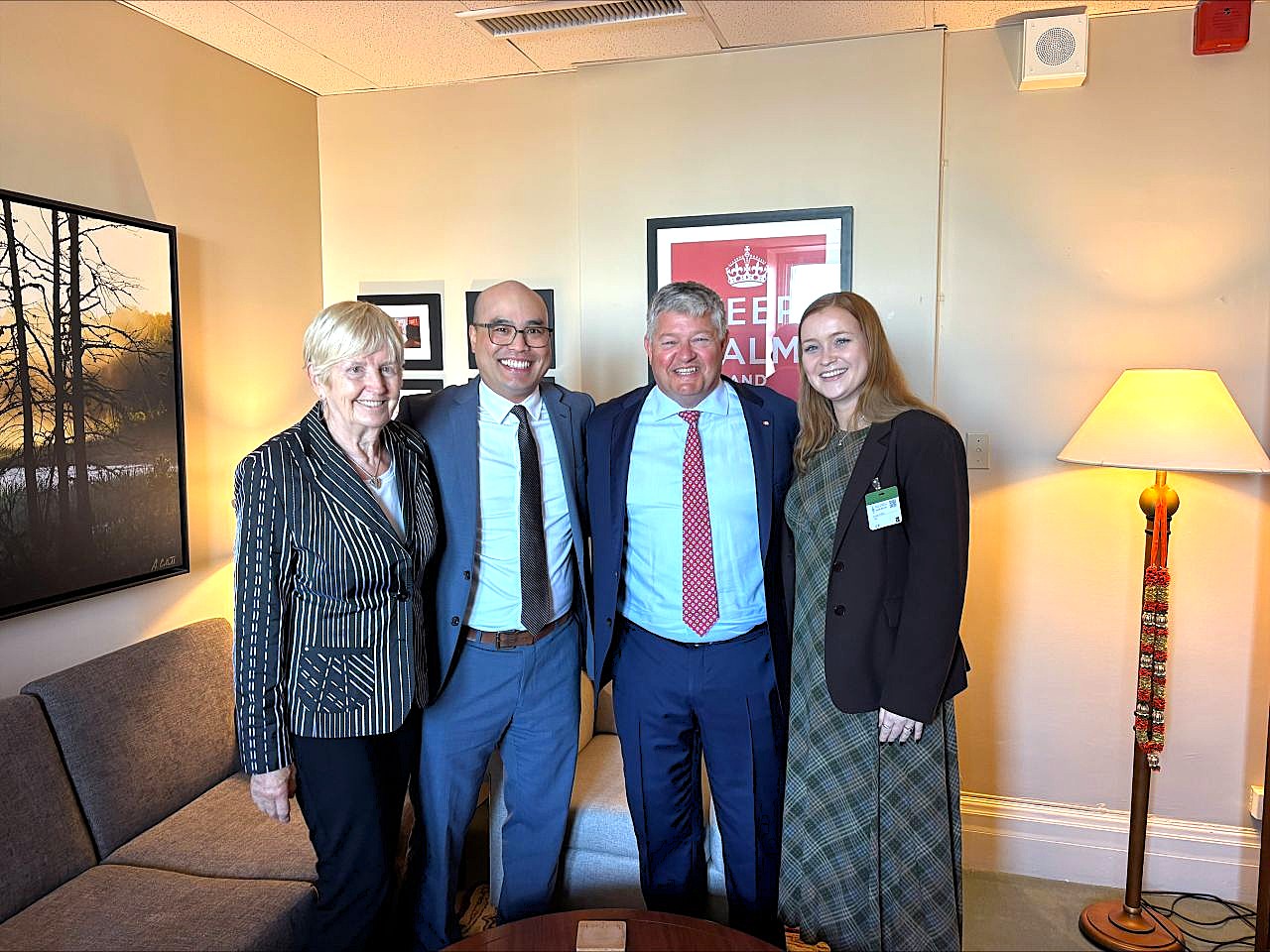
“We definitely reached our daily step goals by walking through the historic halls of the Parliament Buildings and running around the Hill from one meeting to another in the sunshine!” shared Beate Bowron RPP, FCIP, while reflecting on the day’s activities.
This year’s Hill Day covered a lot of political ground. As we continue to articulate in our conversations with federal partners and interest-holders, planners work at the point where national ambitions become local outcomes. In our meeting with Scott Aitchison, his experience as a former mayor of a small Ontario community grounded a productive discussion about the planning-capacity constraints facing smaller communities. Good planning aligns housing, infrastructure, transportation, environmental stewardship, economic development, and community needs. Good planning is not the opposite of speed – it is one of the tools that allows governments to move quickly with fewer avoidable conflicts, redesigns, infrastructure gaps, and unintended consequences.
PlanInsight Canada was a practical and consistent focus throughout the day. Several meetings with MPs and public servants explored how a national platform building on PIBC’s Intelligent Inventory could help planners, elected officials, and communities find and compare verified planning information, reduce research time, share successful approaches across jurisdictions, and support more consistent housing approvals. Aitchison, Chak Au, Kathy Borrelli, and several senior public servants expressed interest in its practical applications and possible research and funding pathways, while emphasizing the importance of clearly demonstrating implementation requirements, cost savings, and housing outcomes.
The second central proposal—the invitation-based National Community Planning Advisory Service—shaped discussions about the unique planning and service delivery needs of rural, remote, Northern, and Indigenous communities. Federal programs will produce stronger and more durable results when they respond to diverse community contexts, meaningfully involve Inuit, territorial, and community leadership, and support communities in accessing the professional capacity needed to plan and implement locally determined priorities. However, these communities also face persistent barriers to accessing and retaining experienced planners.
Our meeting with Lori Idlout, Member of Parliament for Nunavut, was a great opportunity to discuss how major-project initiatives can better support Nunavut communities, the importance of engaging before environmental assessments begin, and the role of planners in building community trust. We also discussed the potential application of the National Community Planning Advisory Service to support community-led planning capacity. Our meeting with the Office of the Minister of Crown-Indigenous Relations also encouraged relationship building with communities where advisory services could be implemented.
Major projects can also create significant opportunities for economic growth. Natural Resources Canada (NRCan) recognized that planning capacity varies considerably across communities nationwide. Without good planning, communities experiencing significant investment may struggle to fully realize lasting economic growth. Our meeting with NRCan focused on how planners can support coordinating major project timelines and bridging discussions between interest-holders.
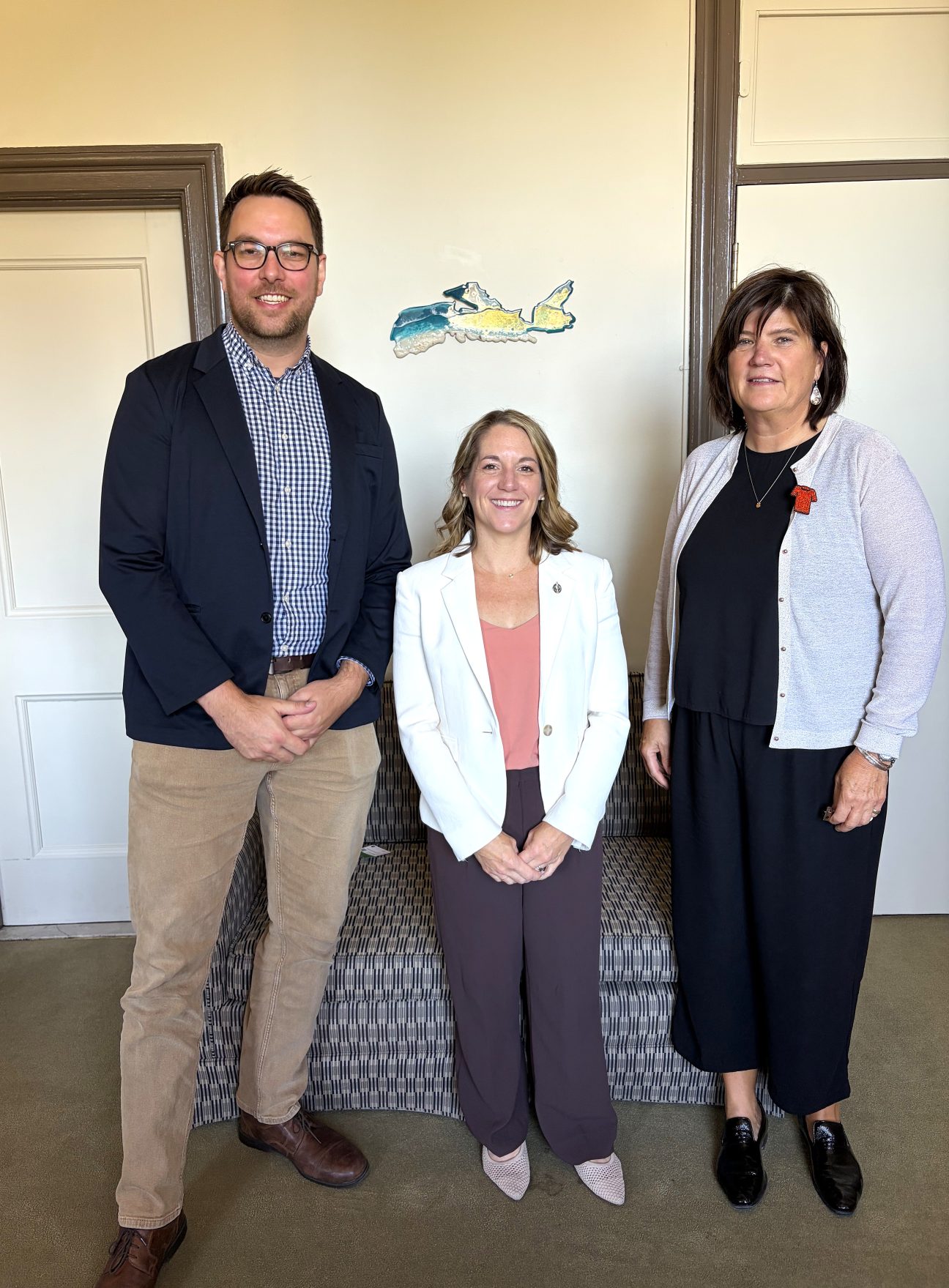
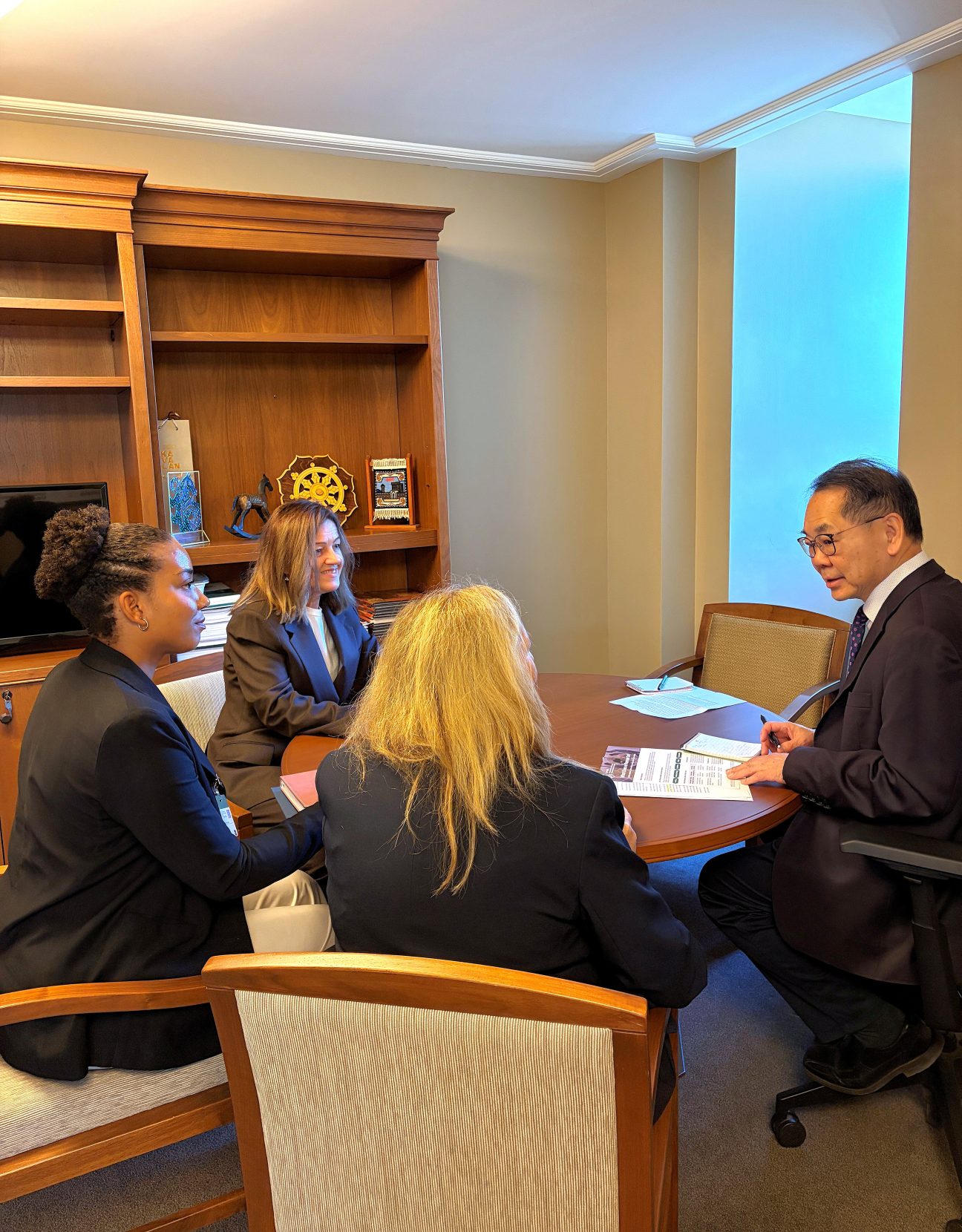
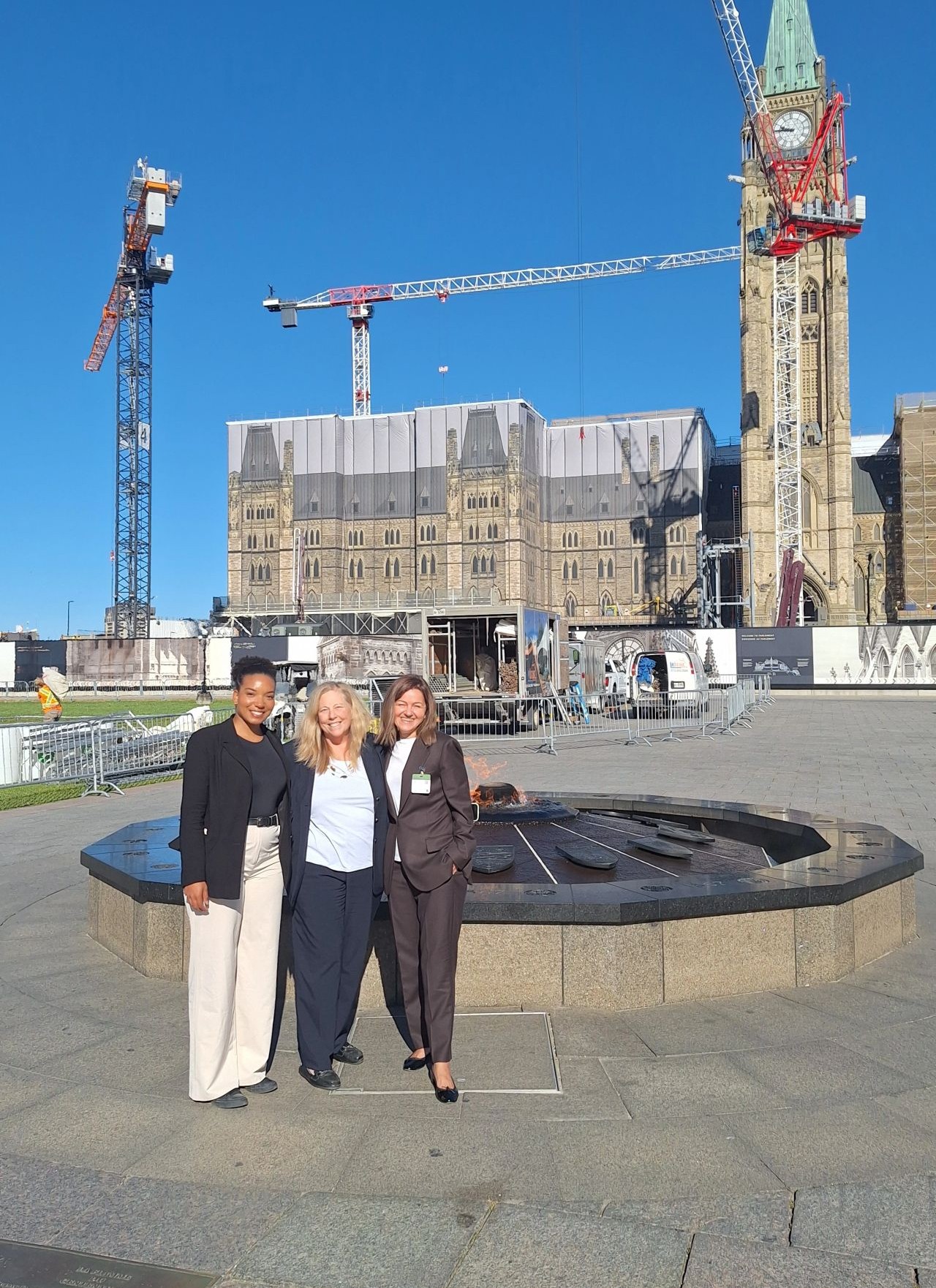
Our meetings with department officials at Housing, Infrastructure and Communities Canada (HICC) were equally productive. Following our discussions, there was a clear understanding of how planners can expand the capacity of federal agencies and provide support to local jurisdictions navigating federal funding programs or delivering federally funded initiatives. Federal officials see significant value in having experienced planners providing dedicated supplemental support to communities as part of housing and infrastructure projects. They understood that planners have unique training and skills to bring different stakeholders to the table and find structured ways to move forward on challenging decisions supported by evidence, analysis, and care.
CIP’s work was also echoed on the floor of the House of Commons, when MP Ellis Ross, Member of Parliament for Skeena—Bulkley Valley, highlighted CIP’s role in helping regions, towns, and First Nations plan around major-project development during the active legislative debate and urged the federal government to consider working with us to help communities plan for the future.
“A good idea will transcend partisan politics… We all know that planning is to a large degree about selling ideas. But for many planners, advocating and pitching ideas to policymakers is a learned skill… With two years under our belt, I believe CIP is on track to continue to use our annual Hill Day as one of the most effective ways to communicate about how our national community of planners can play crucial roles in advancing federal priorities,” reflected Raymond Kan RPP, MCIP.
Overall, the key takeaway from this year’s Hill Day is that the importance of planners in nation-building projects is increasingly understood and acknowledged by MPs and government officials. CIP is dedicated to advancing national awareness and understanding of the planning profession in Canada, and this year’s Hill Day was an important step toward that goal.
“Our collective voice continues to grow in strength and reach. What stands out to me is that planning is ultimately about connecting people, places, evidence, and decisions, and CIP is uniquely positioned to bring that perspective to the national conversation… It is encouraging to see this collective effort increasingly recognized as a practical contribution to turning ambitious goals into meaningful outcomes for communities across Canada,” reflected Olimpia Pantelimon RPP, MCIP, about the impact of CIP’s Hill Days. Following Hill Day, CIP will pursue the potential partnership pathways identified during the meetings, further develop a practical pilot model for the Advisory Service, and strengthen the implementation and research case for PlanInsight Canada.
To support your personal advocacy and our collective work to communicate planners’ role and impact to decision-makers, we are pleased to share a copy of our “What Does a Planner Do?” factsheet, developed to support our conversations on the Hill.
Thank you to our dedicated board, staff, and partners, including Lesley Cabott RPP, FCIP, ICD D, Deborah Morrison, Beate Bowron RPP, FCIP, Georgina Colthurst, Rebecca Judd, Raymond Kan RPP, MCIP, Olimpia Pantelimon RPP, MCIP, Quanah Traviss, and Brandon Umpherville LPP, MCIP, for leading our Hill Day meetings and conversations. We would also like to thank the Members of Parliament, departmental officials, and their staff who took the time to meet with us.