
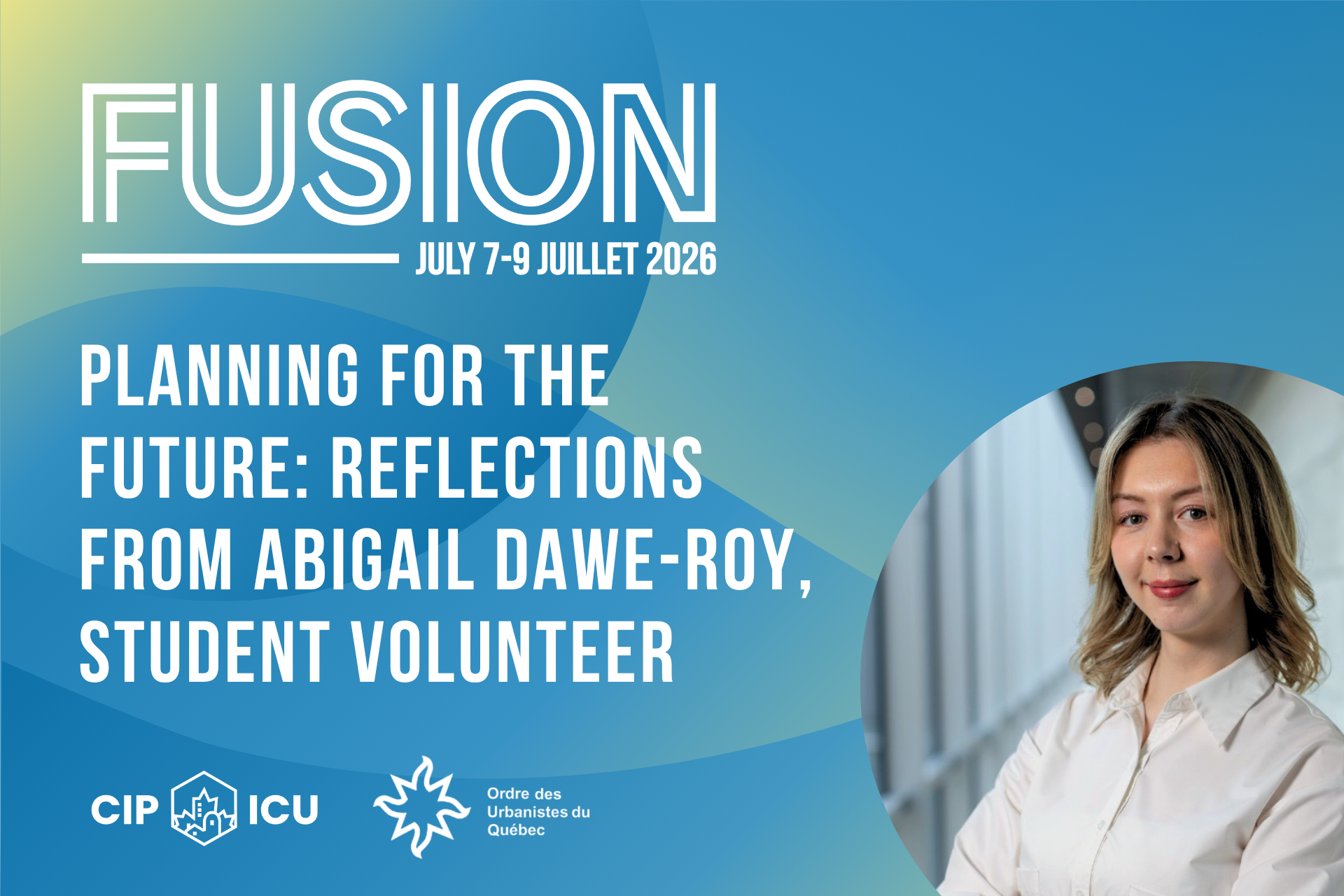
CIP and OUQ hosted FUSION 2026, Canada’s premier national planning conference, in Montreal from July 7-9, 2026. The conference would not have been a success without the support of our student volunteers and our student volunteer partner, the City of Calgary.
In this Q&A, we catch up with Abigail Dawe-Roy, a Master of Urban Planning Student at the University of Montreal, who shares highlights from the conference, lessons learned, and advice for fellow planning students.
Can you tell us a bit about yourself and why you decided to study planning?
I recently completed my Master of Urban Planning at the University of Montreal. What drew me to planning was the opportunity to create and shape spaces that have a meaningful impact on people’s everyday lives. Growing up in rural Quebec, trips into Montreal always felt exciting, and as I later moved closer to the city for my education, I became increasingly dependent on public transportation to get around. Travelling abroad also gave me the opportunity to see different approaches to mobility and urban design, which sparked my interest in how our cities could be improved.
What motivated you to volunteer at FUSION 2026?
As I neared the end of my master’s and looked for more ways to become involved in the planning community, I heard from a group of friends that the FUSION conference would be held in Montreal that year. I knew immediately that it would be a great opportunity to learn firsthand from accomplished professionals and to connect with other students and planners. I was especially excited to experience a national planning conference from behind the scenes while also exploring the different paths available within the profession.
Was there a memorable interaction with a delegate, speaker, or fellow volunteer that stood out to you?
Although it is difficult to choose among the many inspiring pieces of advice shared by the conference’s distinguished speakers, one thing that stuck with me from the Meet & Mentor session was the idea that “planners like helping planners.” I cannot think of a truer sentiment for what I experienced throughout the conference. Whether I was speaking with a fellow student or a seasoned professional, I was met with the same warmth and camaraderie, which made me even more eager to officially join the profession.
What does being a part of the planning community mean to you, and how did this conference influence that at all?
Being part of the planning community, for me, means sharing a common goal of improving the world we live in, whether through policy advocacy, sustainability, or community leadership. As a relatively young profession, planners are perhaps all familiar with the dreaded question from family and friends: “But what does an urban planner do?” To that, I would say, “What don’t we do?” The diversity and scale of the field can sometimes be difficult to put into words, but FUSION showed me that when planning is done well, its impact can be felt in our everyday lives.
Was there a topic discussed at the conference that changed the way you think about planning?
One topic that changed the way I think about planning was the distinction between private and public practice. Before the conference, I did not fully understand why choosing between the two could be such a difficult career decision. Hearing from planners who had moved between public and private practice made me realize that there is no single right path; it often comes down to your personal interests, values, and the kind of impact you want to have. As I move forward in my career, I feel more comfortable knowing that my path can evolve as my interests and goals develop.
How has volunteering at the conference influenced your career goals?
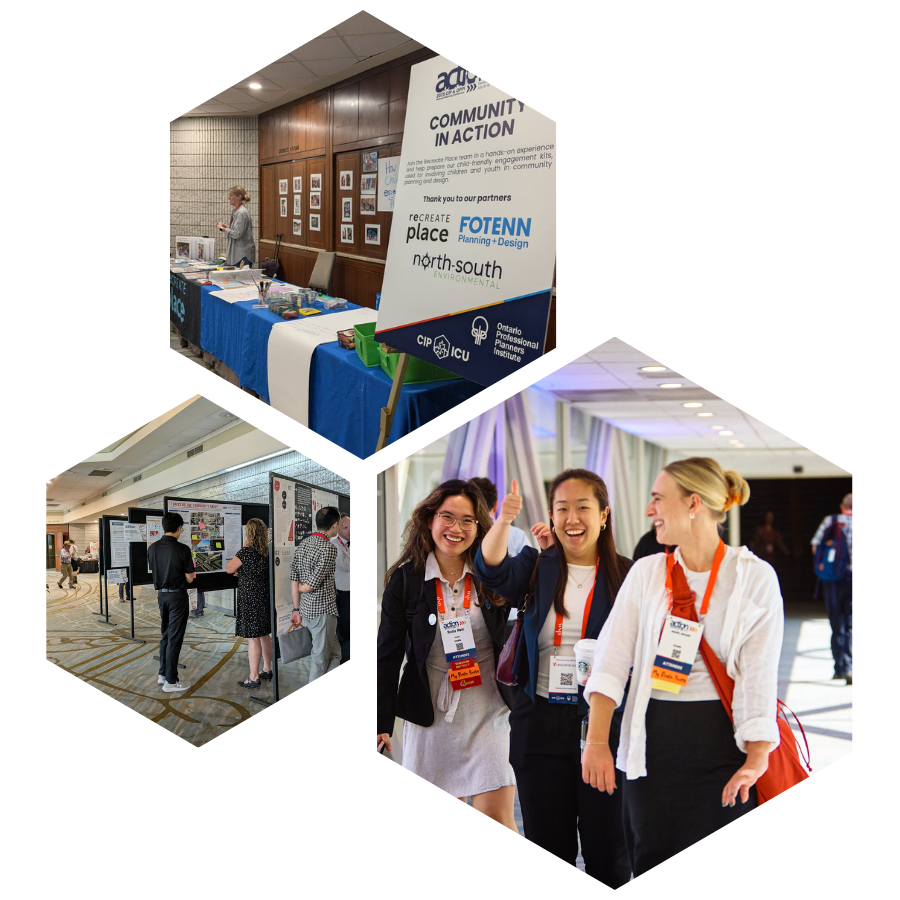
Volunteering at the conference strengthened my confidence in putting myself out there and making connections. When you spend three days walking around a conference in a bright blue T-shirt that says “VOLUNTEER,” people tend to approach you more often, and I ended up making many great connections as a result. Most importantly, volunteering and attending the Meet & Mentor session allowed me to meet someone who has since become a mentor and will supervise my work as I work toward becoming a registered planner in Quebec. The experience reminded me that sometimes the most valuable career opportunities come from simply being willing to introduce yourself and start a conversation.
Do you have any advice for other planning students considering volunteering at future conferences?
I would definitely encourage other students to volunteer at next year’s conference. It did not even feel like I was working because many of the sessions I wanted to attend were the same ones where I was scheduled to “work”. I also thoroughly enjoyed the camaraderie among the student volunteers; even though many of us had just met for the first time, I know that when we cross paths again in the future, we will reminisce about our time at FUSION. My biggest advice would be to take advantage of every opportunity to introduce yourself, ask questions, and be open to the unexpected connections that can come from volunteering.
Is there anything else you’d like to share with CIP members?
I am incredibly grateful to CIP, OUQ, and all the organizers, speakers, mentors, and fellow volunteers who made FUSION 2026 such a memorable experience. As I transitioned from being a planning student into the profession, it was reassuring to see how welcoming and supportive the planning community can be. I am leaving the conference not only with new knowledge and connections, but also with a much better sense of the kind of planner I hope to become. I am excited to carry that sense of curiosity and community with me as I begin this next chapter of my career.
Want to get more involved in the planning community?
Join CIP as a student member for free! As a student member, you’ll gain access to volunteer and networking opportunities, events, and the latest planning news to help you grow your career from day one.
About the Author
Abigail is a recent masters graduate of the Master of Urban Planning program at the University of Montreal. With a background in interior design, she was drawn to planning by her interest in creating spaces that improve people’s everyday experiences, and her studies have since led her to explore urban design, mobility, and sustainable development. During her master’s, she conducted research on accessibility around public transit stations in Hanoi, Vietnam, and became particularly interested in how transportation and the public realm can shape people’s experience of a city. When she is not working on her next planning project, Abigail can usually be found at the barn with her horse.